
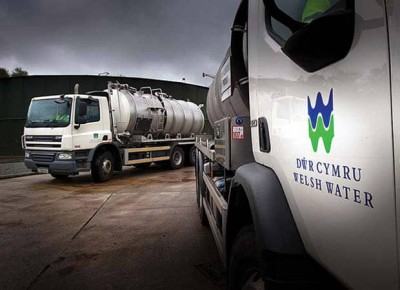
Dwr Cymru Welsh Water will be forced to pay £44.7 million to address overflows and improve the quality of water in rivers with ‘sensitive catchments’.
The industry regulator, Ofwat, confirmed the decision which now closes the seventh case in its sector-wide wastewater investigation and takes the total of resulting enforcement packages and fines across the UK to over £300 million.
The watchdog had announced in March that the company had failed to “operate, maintain and upgrade” its wastewater treatment works adequately.
Funds will have to come directly from Dwr Cymru Welsh Water’s pocket, rather than being added to customer bills, as part of the deal.


“Our investigation found serious and unacceptable breaches in how Dŵr Cymru Welsh Water has operated its wastewater assets which has resulted in excessive spills to the environment,” said Senior Director for Enforcement at Ofwat, Lynn Parker.
“With this investigation now concluded, we expect the company to focus on putting things right so that customers can regain trust in their water company.”
“We are playing our part in holding companies to account with this announcement marking the seventh case we have now closed in our sector-wide investigation, taking the total of resulting enforcement packages and fines to more than £300m.”
The campaign, Save the River Usk, first made the claim on social media in 2025 with a video on social media displaying some kind of discharge from one of their sites. At the time, the company responded to a probe by The Chronicle by saying there “had been no sewage spillages in Abergavenny” that week. The spokesperson also said the river was well within the permitted phosphorous limit of 5mg per litre at the site in question.
Despite this, in March this year, Natural Resources Wales (NRW) identified that 88 per cent of the River Usk’s water bodies failed to meet their required target since the body adopted tighter targets for Special Areas of Conservation.
The quick response from water company was praised by local representatives, but the incident raised questions around the resilience of local infrastructure.
Now, Dwr Cymru Welsh Water will be required to deliver the redress measures included in its enforcement package by 2030. This is investment over and above existing plans the company committed to as part of the 2024 Price Review. These costs will be absorbed by the company and not funded through higher customer bills.
Ofwat has also stressed the agreed package is greater than the £40m fine that it would typically have imposed as a fine and ensures the money is spent directly on environmental improvements. Delivery of the package will be monitored by Ofwat, and the undertakings are legally enforceable.
Comments
This article has no comments yet. Be the first to leave a comment.