
MONMOUTH Archaeologists have been in attendance during excavations for car parking near the Clawdd Du medieval bridge at Overmonnow.
Current excavations have found little so far since the ground was raised over much of the remains fifty years ago.
The site is inside the defences of the medieval suburb of the town, while the Roman industrial town of Blestium extended beyond the ditch beneath some of the adjoining houses.
The archaeological society have been involved with Overmonnow and the Clawdd Du since the 1950s and have carried out numerous rescue excavations and watching briefs.


Roman and medieval pottery and coins were found during the construction of the bungalows around the site at Goldwire Lane, and even more coins were recovered over the road at Homeforge; that was also where the group revealed remarkably well-preserved 13th century iron forges, as reconstructed by Peter Bere, pictured.
During excavations for the foundations of the houses built on the Gilkirk supermarket site next door, Iron Age pottery and wooden structures were revealed by the newly formed professional wing of the society – Monmouth Archaeology.
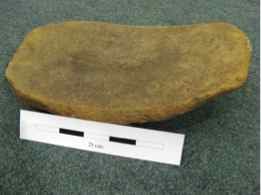
Nearby, a prehistoric saddle quern was found on the builders' spoil heap; these querns were used as early as the New Stone Age but this one is thought to be late Iron Age as Overmonnow, like all the areas of Monmouth on the bed of the post-glacial lake, has been shown to have been under some six metres of water until then.
Comments
This article has no comments yet. Be the first to leave a comment.