

TODAY (27th September) Gwent Wildlife Trust (GWT) is arguing the case to save what it calls Wales’ own equivalent of the Amazon rainforest, the Gwent Levels.
GWT will give their final evidence to the public inquiry into a new motorway across a large area of precious wetlands and GWT will cross-examine the Welsh Government’s consultant on sustainable development.
The wildlife charity is trying to halt plans to put a new six-lane motorway across 15 miles of the Gwent Levels, the proposed bypass around Newport, and has summoned a group of experts to provide evidence of the destruction that the new road would cause.
They have described the plans as the UK’s most damaging road building scheme currently under consideration.


The Gwent Levels are set within an historic and highly designated landscape which contains a wealth of rare wildlife such as the UK’s smallest flowering plant, endangered animals such as water voles and cranes which recently bred there having been extinct in Wales for 400 years.
The Gwent Levels are officially recognised for their natural value; the ancient landscape which is criss-crossed with ‘reens,’ (centuries-old waterways) has eight Sites of Special Scientific Interest (SSSIs), a Special Area of Conservation and a National Nature Reserve.
All will be either destroyed or badly affected if the new road gets the go-ahead.
Sustainable Transport specialist and visiting professor from the School of the Built Environment at Liverpool, John Moores University, Prof John Whitelegg, gave expert evidence on behalf of GWT and said: “All the analysis and evaluation of this road project points unequivocally to its rejection. The proposal is a direct attack on nature, biodiversity and protected landscape and fails every test of sustainability.”
Recently, the Future Generations Commissioner for Wales, Sophie Howe, wrote to the Inquiry to object to the M4 plans saying Welsh ministers are misinterpreting their own legislation and could be setting a ‘dangerous precedent’ in the way they have interpreted the Future Generations Act.
Chief Executive of Gwent Wildlife Trust, Ian Rappel added: “In ecological terms, the Gwent Levels is Wales’ very own version of the Amazon rainforest and should be protected for people and wildlife, now and for future generations.
“Welsh Government say that the proposed M4 scheme is ‘sustainable’ but admits that the scheme does not have ‘respect for environmental limits’. However, not ‘respecting environmental limits’ is the very definition of unsustainability.
“The motorway would rupture the essential cohesion of the Gwent Levels, acting as an impermeable barrier to all flightless wildlife and a dangerous permeable barrier to flying wildlife such as rare bats and bumblebees.
“It would snap the protected habitat like a cracker in two, isolating wildlife populations on either side of the divide, devaluing the habitat on both sides of the motorway making both populations smaller and more vulnerable to local extinction.”
For the past nine months, Gwent Wildlife Trust (GWT) and Wildlife Trust Wales (WTW) have played a lead role at the ongoing Public Inquiry. GWT were the only statutory non-governmental organisation objector to appear at the Inquiry, as they own Magor Marsh nature reserve which would be badly affected by the new road and which lies within two SSSIs. GWT has received a compulsory purchase order for parts of the Barecroft Common section of their Nature Reserve.
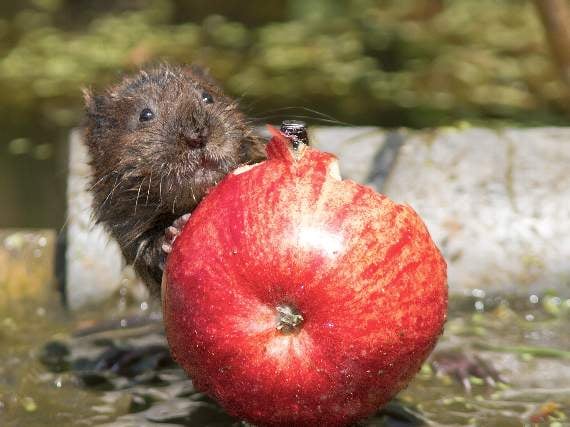
GWT’s Magor Marsh is one of the last remaining areas of natural fenland that once covered the Gwent Levels. A complex network of waterways and marshy grassland. GWT reintroduced water voles to the reserve in 2011, returning them to a landscape they would have once flourished in.
Once thought extinct in the area, water voles can now be seen once again feeding by the water’s edge.
The water voles, left, and other species including dragonflies, bearded tits, warblers, and the rare shrill carder bees are at risk, if plans for the M4 go ahead.
Thousands of people visit and enjoy the tranquility of Magor Marsh every year, this will be jeopardised if the new road is built.
Comments
This article has no comments yet. Be the first to leave a comment.