

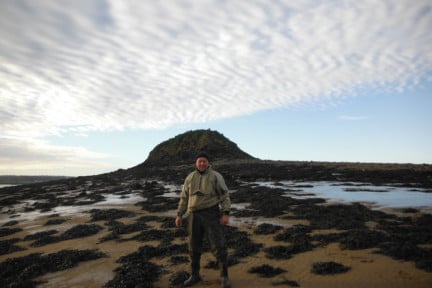
New fishing controls approved by the Welsh Government are likely to spell the end of the Black Rock lave net fishery near Chepstow - the only remaining heritage fishery of its kind in Wales.
Natural Resources Wales has welcomed the recent Ministerial decision to introduce the new byelaws they’ve proposed, including a catch and release policy, designed to halt the decline of salmon and sea trout in Welsh rivers.
Ceri Davies, NRW’s Executive Director of Evidence, Policy and Permitting says there is no single ’magic’ solution to protect and re-build vulnerable stocks. The new byelaws will run alongside other initiatives, including a number of measures to tackle pollution and a programme to improve habitats and remove barriers like artificial weirs.
The eight lave net fishermen licensed to fish the Severn Estuary between the two Severn crossings say ’catch and release’ is not a viable option for their technique as any fish injured in the net would not survive if returned to the water.




They’ve been expecting the Welsh Government to rubber stamp the bye-laws for some time - but they argue that they do not address the real problems.
Secretary of Black Rock Lave Net Heritage Fishery Martin Morgan said: "It’s not about protecting fishing stocks - we’ve seen more salmon this season than for years.
"The real problems are being caused by issues like the amount of water being pumped out of the rivers and the run-off from agriculture causing algae blooms. Rivers in West Wales are experiencing pollution problems from the big dairy farms on a daily basis."
Martin says interest in the fishery, which secured a new 10-year lease last year, has increased significantly through the group giving talks to visitors and local organisations - and they were expecting a visit from HRH the Prince of Wales to their stand at the Royal Welsh Show this week to raise their profile even further.
"We’re licensed to catch five salmon a month as a group but we’re lucky to catch five a season. Our catch is insignificant," said Martin. "We just want to keep our heritage alive and we’ll keep fighting of course but, realistically, this could be the last summer you see us."
Read more about the fishery’s history on page 19
Comments
This article has no comments yet. Be the first to leave a comment.