
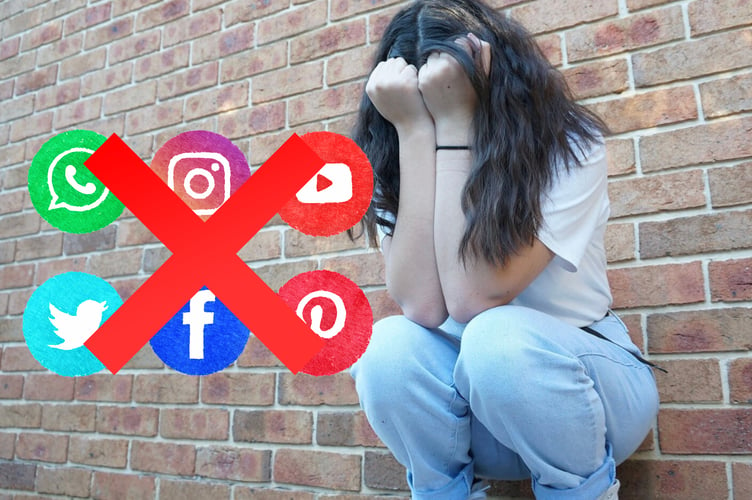
IN a dramatic move last year Australia banned anyone under the age of 16 from social media platforms like Facebook, Tiktok, and Snapchat and now students in Monmouthshire have offered their views on a potential social media ban in this country as the government seeks ways to prevent online bullying and so-called ‘doom scrolling’ and support well being and mental health in young people
In January 2026, the UK Government announced the start of a consultation into how the use of social media sites is affecting children’s everyday life amid concerns the lives of young people increasingly dominated by social media and the constant pressure to keep up to date with Snapchat ‘streaks’ and ‘doom-scrolling’ on multiple platforms like Tiktok and Instagram.
As part of consultation the government says it will gather viewpoints from multiple resources both in this country and further afield in a bid to see what effect social media has on young people and how any ban could be implemented in the future.
Among the issues which will be considered is the potential for curfews and raising digital age of consent on platforms - which it is felt could help retain focus on personal interaction rather than allowing young people to be ‘sucked in’ to conforming to pressures social media can bring.


The consultation will allow the government to listen to a wide variety of views, ensuring they make a well- thought-out decision. In addition to the consultation plans inspection body Ofsted will be keeping social media policies in mind when following out school inspections.
MP for Monmouthshire, Catherine Fookes has given her stance on the U16s ban, as well as announcing a public survey to hear from local residents point of view on the subject.
“As a mum myself I know how hard it was to deal with phone use for younger children and also worrying about what your children may be accessing. It can be a daily battle and we definitely need to support parents and children to navigate through this, said Mrs Fookes.
“That’s why I welcome the UK government’s consultation on whether and how social media use should be restricted for under-16s. It’s a complex area- do we ban specific apps, do we ban all social media for U16s and what can we learn from the Australian ban? These are all questions that need answering and that the Government is looking at.
“Over the past few weeks, I have received hundreds of emails from residents in Monmouthshire expressing strong support for social media restrictions for children under the age of 16.
“I know something definitely needs to be done and to make sure I properly understand the range of views across Monmouthshire, and to ensure I can represent residents’ voices as best as possible in Westminster, I will very shortly be launching a survey.
“Details will be shared on my Facebook and Instagram pages once it goes live so please do look out for it,” she added.
Social media may be an integral part of the daily lift of many young people but one prominent educationalist has expressed his concerns over its impact on the young people he teaches.
Monmouth Comprehensive School Head Teacher, Hugo Hutchison says he fears the use of social media and smart phones are to blame for a rise in bad behaviour which he believes leads to school exclusions.
Mr Hutchison told Monmouthshire County Council’s scrutiny committee, the county’s 34 primary and secondary schools are considering a smartphone strategy which asks parent to not give smartphones to their children until they reach the age of 14.
According to the Mr Hutchison the discussion has sparked positive feedback, with one parent replying, “Thank you for not making us feel we are alone in not wanting our ten-year-old to have unlimited access to all of the internet.”
In the last academic year some 578 students have been excluded from school in Monmouthshire - 95 from primary school pupils and 483 from secondary schools.
Mr Hutchison stressed that exclusions aren’t necessary a bad thing but stressed the harsh truth behind them should not be hidden.
“Maybe ten years ago you’d have a number of schools that aimed to have zero exclusions. That led to exclusions being hidden away, or illegal exclusions, or there were passive exclusions where students didn’t want to go to school because they were scared they would be intimidated or harmed by students who knew there was no consequence to their behaviour.”
This national debate has sparked controversy across the UK, and with that in mind the Beacon has spoken to some of the pupils from Monmouth Comprehensive School and Haberdashers’ Monmouth School who are ultimately at the heart of this decision, to hear their thoughts.
One pupil, aged 14 from Monmouth Comprehensive School, said: “There are positives and negatives to this ban - I think it will make children concentrate more on friendships in person and be more present at home. It will also help at school especially in schools where phones have not already been banned.
“It helps at home if you need to concentrate on homework as it takes away the need to check the phone all the time.
“If banned, it will be more difficult to contact home or friends and possibly mean losing contact. It could take away some people’s freedom as social media is their way of expressing themselves.”
One student from Haberdashers’ Monmouth School commented, “I think there’s a lot of pros and cons to social media. I think pros definitely communication. It’s such a network of friends. But there’s also so many dangers with social media and it can be such an unsafe place.”
Another student added: I live in a place with no access to anywhere because it’s practically a field, there’s no buses or anything so social media is the only way I can contact my friends. If I didn’t have that it would be quite lonely.”
Although no final decision has yet been made as to the future of social media and smart phones in schools, the topic will doubtless continue to spark debate between Monmouthshire residents of all ages well into the coming year.
Comments
This article has no comments yet. Be the first to leave a comment.