

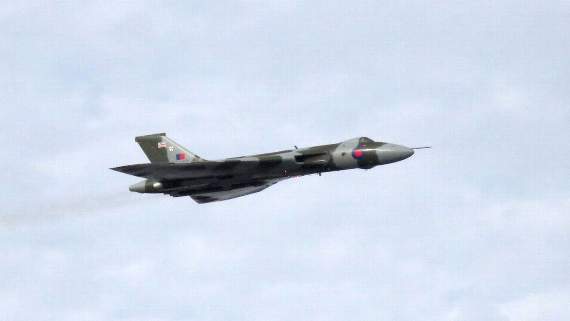
CROWDS gathered on the Severn Bridge this weekend to catch a glimpse of the last flying Vulcan bomber on it’s farewell tour.
The Cold War bomber with it’s distinctive delta-winged shape is currently touring the country before it is retired for good at the end of this month.
After leaving from Doncaster at 12.50pm on Sunday, the Vulcan flew over the Severn Bridge just before 3pm, allowing the crowd to celebrate what is likely to be the last opportunity to see the jet airborne.
Daniel Smith was one of the hundreds of visitors on Sunday. He said: “I had the pleasure of having the opportunity to see for the final time the last flying Avro Vulcan strategic nuclear bomber on the final day of its final tour of the UK.

.png?width=209&height=140&crop=209:145,smart&quality=75)


“I joined crowds of people heading for the M48 Severn bridge at around 2.30pm ready for its scheduled fly by just before 3pm where hundreds of people had lined both sides of the bridge hoping to see the legendary Vulcan flying one last time.
“Initially the aircraft flew from Bristol parallel with the M4 bridge heading for Cardiff and many people thought that was it and had started to leave, 10 minutes later however the aircraft returned again flying low directly over Chepstow and the old Severn bridge.
“The sight of the Vulcan flying so low and the noise of the Rolls Royce jet engines was truly incredible and was followed by a cheer from the crowd as it passed over.
“It was a memorable and sad day saying goodbye to one of the most important and iconic aircraft ever built.”
Vulcan XH558 was manufactured in 1960 and has been touring UK air shows and displays since it’s lengthy £7 million restoration was completed in 2007.
Now, after far exceeding the 250 flying hours promised before her restoration, the jet is landing for the last time.
A statement on the aircraft’s website explained the reason for the iconic jet being grounded.
“First, although we are all confident that XH558 is currently as safe as any aircraft flying today, her structure and systems are already more than ten percent beyond the flying hours of any other Vulcan, so knowing where to look for any possible failure is becoming more difficult. These can be thought of as the ‘unknown unknown’ issues, which can be impossible to predict with any accuracy. Second, maintaining her superb safety record requires expertise that is increasingly difficult to find.
“Our technical partners already bring specialists out of retirement specifically to work on XH558; a solution that is increasingly impractical for those businesses as the necessary skills become distant in their collective memories. We have recently been made aware that the skills issue is particularly acute as our engines age will require a considerable amount of additional (and costly) inspection and assessment.
“Thank you to everyone who has donated their time and/or money to help XH558 fly, including of course the many specialist companies whose expertise has been invaluable.”
After landing for the final time, XH558 will be cared for at a heritage centre where she will continue to excite and intrigue visitors.
Comments
This article has no comments yet. Be the first to leave a comment.