

A PI-ONEERING schoolboy has used his ever-evolving programming skills to collect a third series of beautiful photographs from the edge of the earth’s atmosphere.
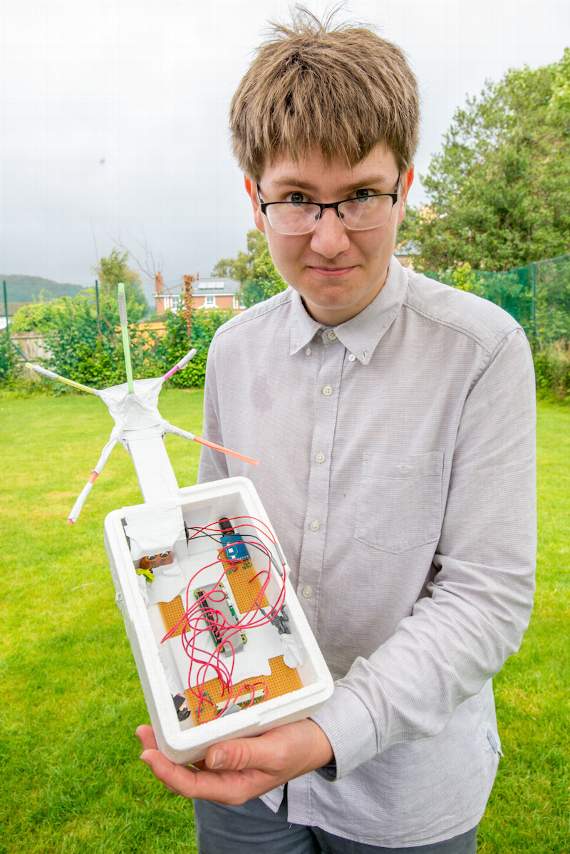
Monmouth School pupil, Sam Sully, combined science, technology and hours of hard work to create an improved version of SkiPi, a huge balloon with a GPS tracker, tiny Raspberry Pi Zero computer, camera and two radios within its payload.
The 17-year-old dedicated the summer holidays to developing his skills through the project, which was funded by an engineering scholarship,
This time, Sam’s payload included a much more sophisticated radio which enabled Skipi 2 to transmit photographs live from space to his laptop – it also allowed Sam to track where it was at all times.


After battling with the bad weather and painstakingly filling the balloon with helium in Monmouth, Skipi 2 began its journey
“Launching it was terrifying as a freak gust of wind sent it flailing around in a tree, but luckily it managed to get free,” Sam said.
“The pictures are very interesting to look at; they show the curvature of the earth and the ozone layer. There are really beautiful ones of the sun this time as I angled the camera differently.
“But the main thing I’m getting out of this is the technical skills.
“The first time I launched the balloon it only had one 10 milliwatt radio on board. I added a second, more sophisticated radio the second time
“This one took 20 seconds to transmit a photo which would have taken the other one 15 minutes.”
This was the first time Sam has been able to see the pictures coming in live, as there was an error with the radio during his second launch in August.
Thanks to his supportive dad taking on the role of driver, he was able to chase the balloon’s signal all the way to its landing spot near Cambridge, around three hours away.
“Dad’s car was rigged up with antenna made from straws, wire and, and as with everything in this project, a lot of Duct tape,” Sam continued.
As the balloon travels upwards, it expands and reaches the size of a double decker bus before exploding and falling down to earth.
Skipi 2 reached a giddy height of 28,400km before it burst.
“It was ascending too slowly because it got really wet in the clouds,” Sam added.
“The worry was that it wouldn’t explode, in which case it could have ended up in Europe.
“It dried off and the water froze and fell off. It started coming down in a farm with tens of acres of completely flat land and landed 12 metres up in a tree on the only bit of woodland on the entire farm.
“Luckily, the farmer was very nice and helped us get it down.”
Comments
This article has no comments yet. Be the first to leave a comment.